5787 – Vayera
Parashat Vayera 5787: an open tent in the heat of the day, a plea for a doomed city, a wife who looked back, and a father's knife stayed, beside the news.
Parashat Vayera 5787
A man three days after his covenant runs out into the heat to bring strangers in, argues with God for a city he does not live in, and is asked for the son he waited a hundred years to hold.
Last week ended with Avram renamed Avraham and circumcised at ninety-nine. This week God appears to him at the door of his tent, and Avraham leaves that vision standing to run to three travellers. They promise a son. Two of them go on to Sodom, and Avraham bargains with God from fifty righteous down to ten. Lot is pulled out, his wife looks back, the cities burn. Avraham sojourns in Gerar, where Sarah is taken a second time. Yitzchak is born, Hagar and Yishmael are sent into the desert and a well is opened for them, Avraham and Avimelech swear an oath over a well at Beersheba, and then God says: take your son, your only one, whom you love.
It is read this year four days after Israel goes to the polls, in a week that began with two soldiers killed near Hebron and the final surveys showing a country split down the middle. A portion about who is let in, who is spared, who looks back and what may be asked of a father sits beside all of that below. This post was written on Sunday 25 October, before the vote.
Parasha at a Glance
| Name | Vayera, and He appeared. The portion opens with God appearing to Avraham, and closes on the mountain Avraham names God will see. |
| Reading | Genesis 18:1 to 22:24, seven aliyot. Maftir Genesis 22:20 to 22:24. |
| Position | Fourth of the fifty-four parashiyot; the fourth portion of Sefer Bereshit. |
| Hebrew date | Shabbat, 20 Cheshvan 5787. Civil date 31 October 2026. |
| Haftarah | II Kings 4:1 to 4:37, Elisha, the widow's oil and the Shunammite's son. Sephardim read 4:1 to 4:23. |
| Israel this week | The Knesset election is on Tuesday 27 October (16 Cheshvan). V'ten tal umatar continues in Israel from Motzei Shabbat Noach; the diaspora waits until December. No other Israel calendar observance falls in the week. |
| Central theme | Hospitality greater than the vision of God, pleading for justice for others, the cruelty of Sodom, not looking back, prayer for one's enemy, and the binding of Yitzchak. |
| Next parasha | Chayei Sarah, Shabbat 7 November 2026. |
Calendar, leyning and haftarah verified against the Hebcal Israel calendar with the diaspora setting off. This week Israel and the diaspora read the same portion; the Sephardi haftarah is shorter.
Torah Overview
The Tent, the City, the Well, the Mountain
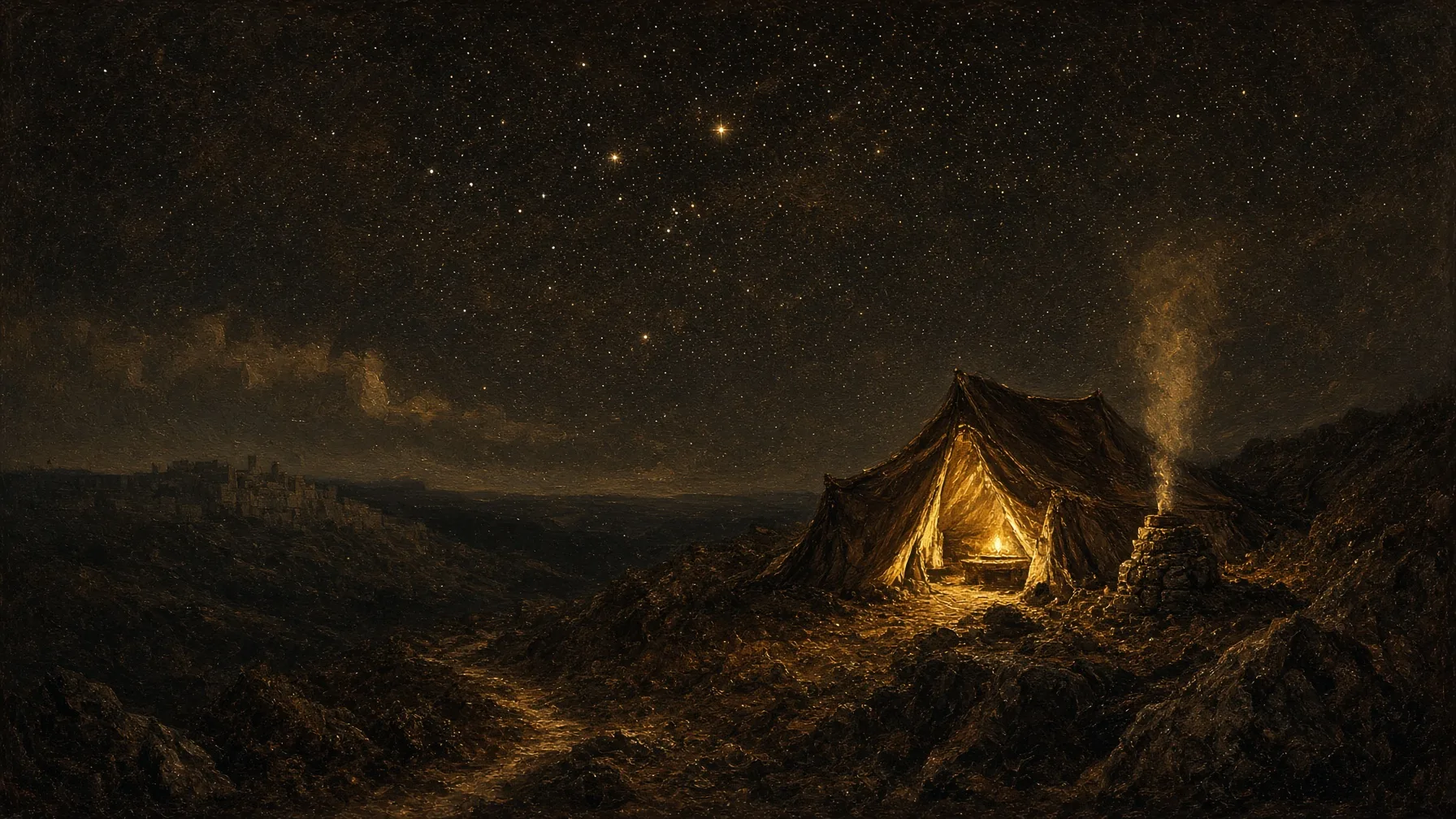
The portion opens: And God appeared to him in the plains of Mamre, as he sat at the door of the tent in the heat of the day. Avraham lifts his eyes and sees three men. He runs to them, bows, and asks them not to pass by. He offers a little water and a piece of bread, and then brings fine flour baked into cakes, a calf tender and good, butter and milk, and stands over them under the tree while they eat. One of them says that at this time next year Sarah will have a son. Sarah, listening at the tent door, laughs to herself: after I am withered, shall I have pleasure, and my lord is old? God asks why she laughed. Is anything too wondrous for God?
The men look out toward Sodom, and God says: Shall I hide from Avraham what I am about to do? For He has known Avraham so that he will command his children to keep the way of God, to do righteousness and justice. The cry of Sodom and Gomorrah is great. Avraham steps forward: Shall the Judge of all the earth not do justice? If there are fifty righteous in the city, will You sweep them away with the wicked? God agrees to spare it for fifty. Avraham, who calls himself dust and ashes, asks for forty-five, forty, thirty, twenty, and ten. God agrees to ten, and goes.
Two angels come to Sodom in the evening. Lot, sitting at the gate, takes them in and bakes them matzah. The men of the city, young and old, all the people from every quarter, surround the house and demand the guests. The angels strike them blind and tell Lot to take his family out. His sons-in-law think he is joking. At dawn the angels seize Lot, his wife and two daughters by the hand. Do not look behind you. God rains brimstone and fire on Sodom and Gomorrah. Lot's wife looks back and becomes a pillar of salt. Avraham rises early to the place where he stood before God, and sees the smoke of the land going up like the smoke of a furnace.
In Gerar, King Avimelech takes Sarah. God comes to him in a dream; Avimelech protests his innocence, returns her, and Avraham prays for him, and Avimelech's household is healed. Directly after that verse: And God remembered Sarah as He had said. Yitzchak is born, circumcised on the eighth day, and Sarah says God has made laughter for me. At the weaning feast Sarah sees Yishmael mocking and tells Avraham to send Hagar and her son away. It is very grievous to Avraham. God tells him to listen to Sarah. Hagar wanders in the desert of Beersheba; the water runs out, she puts the boy under a bush and sits a bowshot away so as not to see him die. God hears the voice of the boy where he is, opens her eyes, and she sees a well. Avraham and Avimelech then cut a covenant at Beersheba over a well Avimelech's servants had seized, with seven ewe lambs as witness.
Then after these things, God tested Avraham. Take your son, your only one, whom you love, Yitzchak, and go to the land of Moriah, and offer him there. Avraham rises early, saddles his donkey, splits the wood, and walks three days. Yitzchak asks: Here is the fire and the wood, but where is the lamb? God will see to the lamb, my son. The two walk on together. Avraham binds his son on the altar and takes the knife. An angel calls from heaven: Do not lay your hand on the boy. A ram is caught in the thicket by its horns, and Avraham offers it instead. He names the place God will see, and is promised that through his seed all the nations of the earth will be blessed, because you listened to My voice. The portion ends with news of Nachor's family, and the birth of Rivkah.
The haftarah, II Kings 4, echoes the portion. A great woman of Shunem makes a room for the prophet Elisha, and he promises her a son at this season next year, the same words the angel used to Sarah. The child grows, dies in her lap, and the prophet brings him back to life.
Talmudic Depth
A. The third day after the covenant: Bava Metzia 86b
Bava Metzia 86b asks what the heat of the day means. Rabbi Chama son of Rabbi Chanina says it was the third day after Avraham's circumcision, and God came to visit him. God took the sun out of its sheath so that no travellers would trouble him. Avraham sent Eliezer out to look for guests, and when Eliezer came back with none, Avraham said I do not believe you and went out himself. The three men, the Gemara says, were Michael, Gavriel and Raphael: Michael to announce the son, Raphael to heal Avraham, Gavriel to overturn Sodom.
The same daf brings Rav Yehuda in the name of Rav: Every action that Abraham performed himself for the ministering angels, the Holy One, Blessed be He, performed Himself for Abraham's descendants. And every action that Abraham performed through a messenger, the Holy One, Blessed be He, likewise performed for his descendants through a messenger. He ran to the herd, and God brought quail; he took butter and milk, and God rained bread from heaven; he stood over them under the tree, and the cloud stood over Israel in the desert. Kindness done in person is answered in person. Section 1 of The World This Week comes back to this.
B. Greater than receiving the Divine Presence: Shabbat 127a
On Avraham's words my Lord, if I have found favour in Your eyes, please do not pass from Your servant, Shabbat 127a brings Rav Yehuda in the name of Rav: Hospitality toward guests is greater than receiving the Divine Presence. Avraham asked God to wait while he tended to the travellers. Rabbi Elazar adds that this shows God's way is not the way of flesh and blood: a lesser person cannot tell a greater one to wait, and Avraham could say it to God.
The halachic point is sharp. Avraham was in the middle of a vision, and he did not treat the strangers as an interruption of it. He treated them as the continuation of it.
C. The bed of Sodom and the girl with the bread: Sanhedrin 109a to 109b
Sanhedrin 109a reads the verse the men of Sodom were wicked and sinners before God exceedingly: wicked with their bodies, sinners with their money. Sanhedrin 109b gives the details. Sodom had beds for guests; if a guest was too long they cut him, if too short they stretched him. When a poor man came, each citizen gave him a dinar with his name written on it, and no one would sell him bread; when he died, each took back his coin. A young woman carried bread to the poor in a pitcher so the city would not see. It was discovered, and they smeared her with honey and set her on the city wall, and the hornets came and killed her.
Rav Yehuda says in the name of Rav that this is the meaning of the cry of Sodom is great, rabbah: read it as rivah, the young woman. It is due to that sin that the fate of the people of Sodom was sealed. The Talmud's Sodom is not a city of disorder. It is a city with laws, and the laws are designed to make kindness a crime. Section 3 below comes back to this.
D. He stood, and he prayed for his enemy: Berakhot 26b and Bava Kamma 92a
Berakhot 26b brings a baraita in the name of Rabbi Yosei son of Rabbi Chanina: Abraham instituted the morning prayer, from the verse Avraham rose early in the morning to the place where he had stood before God. He had stood the day before to plead for Sodom, and standing, the Gemara says, means prayer. The morning Amidah begins on the morning after a prayer that failed.
Bava Kamma 92a takes the Gerar story. Rava asks Rabba bar Mari for the source of the rule that anyone who asks for compassion from Heaven on behalf of another, and he requires compassion from Heaven concerning that same matter, he is answered first. Rava brings it from the Torah: Avraham prayed to God, and God healed Avimelech and his wife and his maidservants, and they bore children, and immediately after it, and God remembered Sarah. Avraham prayed for the household of the king who had taken his wife, for the very thing he himself lacked, and he was answered first. The same daf's mishnah learns from Avimelech that one who has wronged another is not forgiven until he asks, and that the one wronged who refuses to forgive is called cruel.
E. After the words of the Satan: Sanhedrin 89b and Rosh Hashanah 16a
Sanhedrin 89b asks what after these things refers to. Rabbi Yochanan in the name of Rabbi Yosei ben Zimra says: after the words of the Satan, who complained that Avraham made a great feast for Yitzchak's weaning and offered not one dove. God answered that Avraham would give up his son if asked. The Gemara notes the word na, please: God did not command, He asked, like a king asking his warrior to stand firm in one last war, so that others will not say: There is no substance in the first victories. On the road the Satan argues with Avraham in the words of Job, and finally tells him he has heard from behind the curtain that the ram is to be offered and not Yitzchak. Avraham answers: this is the punishment of the liar, that even if he speaks the truth, others do not listen to him.
Rosh Hashanah 16a gives the reason for the ram's horn on Rosh Hashanah, in the name of Rabbi Abbahu: Sound a blast before Me with a shofar made from a ram's horn, so that I will remember for you the binding of Isaac, son of Abraham, in whose stead a ram was sacrificed, and I will ascribe it to you as if you had bound yourselves before Me. The Akeidah is not a model Israel is told to repeat. It is a merit Israel is told to remember. Section 7 below comes back to this.
Kabbalistic Depth
A. Zohar: Exposed to the Shekhinah at the door of the tent
The Zohar opens Vayera with the result of last week's covenant. Rabbi Abba says: Before Abraham was circumcised he was, as it were, covered over, but as soon as he was circumcised he became completely exposed to the influence of the Shekinah, which thereupon rested on him in full and perfect measure (Zohar, Vayera 1:13). The tent door is the lower world, the opening through which the upper world is received, and the heat of the day is the right side, Chesed, the side Avraham cleaves to (1:12).
The Zohar then reads the three men a second way: Who are these three men? They are Abraham, Isaac, and Jacob, who stand over this lower grade, and from whom it draws sustenance and nourishment (1:14). On this reading the guests at the door are the patriarchs themselves, the three lines of Chesed, Gevurah and Tiferet, and the one who runs to receive them is Malchut, the open door. To take a stranger in is, in the language of the Zohar, the same movement as receiving the light above.
B. Zohar: Why Avraham did not ask for Lot
Rabbi Yehuda explains why God had to tell Avraham at all: God had given Avraham the whole land, making him father of a multitude of nations, and so it is not fitting for me to inflict punishment on the children without first giving warning to their father (Zohar, Vayera 11:181). Avraham is told about Sodom because Sodom, too, is in some sense his.
Then Rabbi Abba notices what Avraham does not say. He pleads for fifty, for forty, for ten, and never once for Lot. Why so? In order that it should not appear that he was asking a reward for his good deeds (11:182). And for exactly that reason God saved Lot, as it is written, God remembered Avraham and sent Lot out of the midst of the overthrow (11:183). Avraham argued for a principle, the righteous are not to be swept away with the wicked, and not for a relative. Section 2 below comes back to this.
C. Zohar: She turned her face to the destroyer
On his wife looked back from behind him, the Zohar asks why the verse says behind him. Rabbi Yose says the destroying angel was following Lot, overturning each place only after Lot had passed it. Hence the warning do not look behind you, meaning for behind thee I am doing my work of destruction. For as long as the destroying angel does not see the face of a man he does not harm him; but as soon as Lot's wife turned her face to look at him she became a pillar of salt (Zohar, Vayera 19:287 to 288).
In the Zohar her failure is not memory. It is turning to face the destruction itself, letting it see her and take her. One may remember what was destroyed and still walk forward with one's face toward life. Section 4 below comes back to this.
D. Zohar: Water joined to fire on Moriah
Rabbi Shimon reads God tested Avraham as the Zohar's central account of the Akeidah. The question is why the verse says Avraham and not Yitzchak, who was thirty-seven and could have refused. The answer: it was requisite, in order that Abraham might attain to perfection, that he should be invested with the attribute of rigour, which he had not exhibited up to that time. Now, however, water was united with fire and fire with water (Zohar, Vayera 33:490 to 491). Avraham is Chesed, water; Yitzchak is Gevurah, fire. On the altar the two are joined, and the discord was appeased (33:492).
The Zohar does not soften what is being asked: For who ever saw a father's heart turn from compassion to cruelty? (33:493). Its answer is that the binding was the joining of love and judgment until Yaakov, Tiferet, could complete the three. The Zohar's Akeidah ends with no one killed. Rigour is taken into love, and the knife is stopped.
E. Chassidut: The humility at the door, and fear without the pull of love
The Sefat Emet, in the Sefaria translation by Dan Levy, reads sitting at the door of the tent as humility: even in the middle of the revelation Avraham felt himself unworthy and stayed at the opening (Sefat Emet, Vayera 3). In another teaching on now I know that you fear God, he asks why fear is praised in a man whose service was love. His answer: because God did not truly desire Yitzchak's death, Avraham's heart did not feel the natural pull it felt toward every other mitzvah. The test was to obey in fear when love did not carry him. The command, he says, was never intended to be completed in action (Sefat Emet, Vayera 10).
The Berditchever Rav, in Kedushat Levi, Vayera 4, reads he lifted his eyes and saw, and ran: a tzaddik feels light in himself on seeing a good person, and Avraham ran because he felt that light at once. On the hospitality of this portion Chabad has a collection of Vayeira classes, including Rabbi Ruvi New on the lesson of hospitality from Abraham and Sarah. On the plea for Sodom, Rav Menachem Leibtag at Yeshivat Har Etzion argues that Avraham asked for the whole city to be saved for the sake of its righteous, in the hope that they could lead it to teshuvah (Avraham and Sedom).
I could not pin down a specific passage of the Arizal, the Alter Rebbe, the Baal Shem Tov, Rebbe Nachman or the Pri Tzaddik on this portion to a verified source this week, so none is quoted. The joining of Chesed and Gevurah in the Akeidah, which the Zohar states above, is the theme the later Kabbalists build on.
The World This Week
Seven structural parallels between the portion and the news of 18 to 25 October 2026. A parallel is a shape, not a verdict. No one below is being compared morally to Avraham, to Sarah, to Avimelech, or to the people of Sodom, and each section says what the parallel does not mean. Figures in dispute are given with whoever asserted them, and are not averaged.
1. He ran to meet them from the door of the tent
UNHCR said more than 250,000 people were internally displaced in Yemen between 1 August and 17 October, about half of them in Taiz. Spokesman Matthew Saltmarsh said the agency was deeply concerned about the escalating displacement situation; it also recorded 3,836 new arrivals in Djibouti, and 139 bodies recovered after a boat sank between Djibouti and Yemen on the night of 8 to 9 October (AFP via Dhaka Tribune, 20 October). The UAE reported five convoys of 60 trucks carrying 789 tonnes of food and shelter into Gaza that week (WAM via Gulf Today, 19 October), and Dubai opened a winter air bridge, its first C-130 landing at Al Arish with thermal blankets for UNICEF (The National, 23 October).
The shape is the tent in the heat of the day: travellers with nothing, and a host who goes out to them. The correction is that the figures above are the donors' and agencies' own, and a convoy is not a tent. Avraham did not count tonnes; Bava Metzia 86b says he did with his own hands what God would later do with His, and sent Eliezer only when he could not go. No government is Avraham for sending aid, and none is Sodom for being asked to. The measure the Talmud gives is personal: what one does oneself, for the person in front of one.
2. Will You sweep away the righteous with the wicked?
Two soldiers were killed at a checkpoint near Hebron on 23 October: Staff Sergeant Ron Yonatan Roytman, 23, of Ashkelon, and Sergeant Yuval Shai Svilem, 20, of Hod Hasharon, of the Home Front Command's 775th Ari Battalion; three others were wounded, and the two gunmen were killed. Prime Minister Netanyahu said we will act to destroy this place, to change it completely (Times of Israel, 23 October). In the operation that followed, the numbers displaced are disputed and are given here as each party gave them: Defense Minister Katz told Kan about 2,000 have been displaced; WAFA, citing Hebron governor Khaled Dudin, said more than 200 families; Hebron mayor Youssef al-Jaabari said forces sought to displace another 2,500 people. The IDF called the operation focused and limited to the area from which the terrorists operated and said it detained 10 suspects; Dudin called it collective punishment (Times of Israel with AFP, 24 October).
The shape is Avraham's question, shall the Judge of all the earth not do justice? The correction runs both ways and has to be said plainly. Murdering soldiers at a checkpoint is murder, and the Torah does not ask Israel to leave it unanswered; nothing in Avraham's plea is a plea for the murderers. Nor is Hebron Sodom, and no one on any side is God passing sentence. What the portion insists on, and what the Zohar sees in Avraham's silence about Lot, is the principle he argued for: that those with no part in the crime are not to be swept away with those who did it. That principle binds every side, including those who send gunmen into a city. Whether this operation keeps it is a question for the facts as they come out, not for this page.
3. Brimstone and fire
A magnitude 7.0 earthquake struck Nagqu in northern Tibet. Chinese state media reported at least 16 dead and 54 injured, and the Nagqu media office at least 339 homes collapsed; the depth is disputed, 11 miles according to the USGS and 6.2 miles according to Xinhua (CBS News with AP, 23 October). Reuters later reported the local government's figure of 65 injured with the toll unchanged at 16, more than 12,000 people relocated and 413 aftershocks (Reuters via TimesLive, 23 October). In Germany, Hitler's Kehlsteinhaus, the Eagle's Nest, was completely ablaze; about 200 firefighters were deployed and police took a suspicious person into custody, with German media reporting suspected arson and no official cause given (Times of Israel, 24 October).
The shape is the overturning of the cities of the plain. The correction is the Talmud's. Sodom burned for a sin the Torah names and God judged: a law that made kindness a crime, a girl killed for carrying bread (Sanhedrin 109b). No one may read an earthquake as a verdict on the people of Nagqu; they are its victims, and the right response is the one Avraham gave, to pray. Nor is a fire set by a suspect in custody fire from heaven. The Eagle's Nest belonged to the greatest murderer of Jews in history, but arson is a crime under any law, and memory of what that house stood for is kept by remembering, not by burning.
4. Do not look behind you
Families of 17 of the 46 hostages who died in captivity wrote an open letter to the prime minister: If you have even a shred of humanity left, stop using our loved ones for election propaganda; Nina Sarusi, mother of Almog Sarusi, wrote You brought them back dead (Times of Israel, 20 October). Two days later October 7 families announced they would stand outside polling stations; Yocheved Lifshitz's sign reads My husband was killed in captivity, remember him in the voting booth!, and the families say the initiative is tied to no party (Times of Israel, 22 October).
The shape is the command not to look back as the cities burn. The correction is essential: these families are not Lot's wife, and their looking back is not her sin. Israel is commanded to remember, and grief is not a failure of faith. The Zohar says her failure was turning her face toward the destroyer so that it took her. The bereaved here are asking for the opposite: that the dead not be used, and that the living carry their memory forward. Neither letter is an endorsement, and neither is this page.
5. The well that Avimelech's servants seized
The parliament of eastern Libya ratified a maritime memorandum with Turkey over a potentially gas-rich area. Israel's Foreign Ministry said it strongly condemns the decision, that it infringes upon the sovereign rights of our close allies in the region, and accused Turkey of working to destabilize the east Mediterranean region; Egypt called the memorandum null and void, Turkish foreign minister Hakan Fidan called it legitimate, and Greece and Cyprus object (Times of Israel, 22 October; also JNS, 22 October). Israeli and Lebanese officials met at US Central Command in Tampa on a US-brokered framework that, according to IDF sources, includes disarming Hezbollah; Lebanese reporting said these are not peace negotiations, and President Aoun's demands are an end to IDF operations in the south and withdrawal (Jerusalem Post, 20 October).
The shape is Beersheba: a resource under the ground, a dispute over who dug it, and an oath between neighbours. The correction is that no state in either story is Avraham or Avimelech. Avraham reproved Avimelech openly for the seized well, and the treaty came only after the reproof, with seven lambs set aside as witness so that ownership would not be argued again. The lesson is about the order of things, a claim stated, a witness set and then a covenant, not about which party is right. That is for the parties and the law of the sea.
6. God heard the voice of the boy where he is
Reuters reported, citing USGS data, that Sudan's July to September rainfall was the lowest in more than 30 years nationally and the lowest since 1984 in North Darfur, that the WFP has $276 million for Sudan, less than half last year's budget, and that acting WFP head Carl Skau called it a recipe for disaster; Tawila camp holds about 700,000 displaced people (Reuters via 93.3 The Drive, 23 October). Ministers of 29 Western countries with the EU and US warned that the number of children suffering from severe malnutrition could rise to over 825,000 (Sudan Tribune, 24 October). On 18 October Sudan Tribune reported an RSF attack that killed at least 11 displaced people at Hajar Sanakeet in West Darfur; the Darfur regional health minister said most of the casualties were women and children, and the RSF could not be reached for comment (Sudan Tribune, 18 October).
The shape is Hagar in the wilderness of Beersheba: the water gone, a child put under a bush, a mother who sits a bowshot away so as not to watch. The correction is the verse itself. God heard the boy where he is, as he was, without asking first whose son he was or what he would become. A child dying of thirst is not a symbol and is not anyone's enemy. And no drought makes those who attack the displaced into anything but what they are.
7. The two of them walked on together
The final polls before Tuesday's vote, as published by Ynet, given separately and not averaged: Kan 11 and Kantar (1,006 respondents, margin 3 percent) gave Yashar 22, Likud 20, B'Yachad 14, the change bloc 52, Netanyahu's allies 50 and the Arab-led parties 14, with the Reservists party at 4 seats outside both blocs; Channel 12 and Midgam with iPanel (1,018, 4.4 percent) gave 23, 21, 15, 56, 50 and 14; Channel 13 and HaMadad (1,875, 2.3 percent) gave 22, 19, 14, 54, 50 and 16, with the Reservists party below the threshold in both (Ynet, 23 October). The Times of Israel, reporting the same polls, said neither bloc is predicted to be able to form a government (Times of Israel, 24 October). A Latet survey of 400 reservists found 32.5 percent say their finances are worse than before the war and 70.2 percent have delayed or given up professional opportunities (Times of Israel, 22 October). At the Rabin memorial on 22 October President Herzog said: I stand here and say: Words kill (Times of Israel, 22 October).
The shape is the road to Moriah: a father and son walking three days, the two of them together, toward a test neither chose. The correction must be explicit. No soldier's death is an Akeidah offered by any politician, and no party is Avraham. The Akeidah ended with the knife stopped; the Torah calls child sacrifice an abomination, and Rosh Hashanah 16a teaches Israel to remember the binding, not to repeat it. The reservists and the bereaved have given what was asked of them, and what they ask back is that the country walk together. This page endorses no list. More on how Torah frames leadership in Israel is in The Leadership of Israel.
Summary
| Torah | Three guests in the heat of the day, a son promised and laughed at, the plea for Sodom, Lot's rescue and his wife's backward look, Sarah taken in Gerar, Yitzchak born, Hagar's well, the covenant at Beersheba, and the binding of Yitzchak. |
| Talmud | The third day after the milah, and kindness repaid in kind (Bava Metzia 86b); hospitality greater than the Divine Presence (Shabbat 127a); the bed of Sodom and the girl with the bread (Sanhedrin 109a to 109b); the morning prayer and praying for one's enemy (Berakhot 26b, Bava Kamma 92a); the Satan's accusation and the ram's horn (Sanhedrin 89b, Rosh Hashanah 16a). |
| Kabbalah | Exposed to the Shekhinah at the open door; Avraham pleads for a principle and not for Lot; Lot's wife turns her face to the destroyer; water joined to fire on Moriah; humility at the door, and fear without the pull of love. |
| This week | Displacement in Yemen and aid into Gaza; two soldiers killed near Hebron and a disputed operation; an earthquake in Tibet and a fire at the Eagle's Nest; bereaved families and the election; a maritime deal and talks over a border; drought and children in Sudan; final polls, reservists, and "words kill". |
| The thread | Avraham's greatness in Vayera is that the vision of God did not close his tent. He went out to strangers, argued for people who were not his, prayed for the king who wronged him, and on the mountain was stopped before the knife came down. |
Closing
May every tent stay open to the traveller in the heat of the day. May the righteous never be swept away with the wicked, and may the Judge of all the earth do justice. May the bereaved walk forward with their faces toward life. May every child in the desert be heard where he is, and a well opened before him. May Israel walk on together after Tuesday, whatever the count. And may the merit of the binding of Yitzchak stand over his children, as the ram stood in his place.
Shabbat Shalom.