
Parashat Shoftim 5786
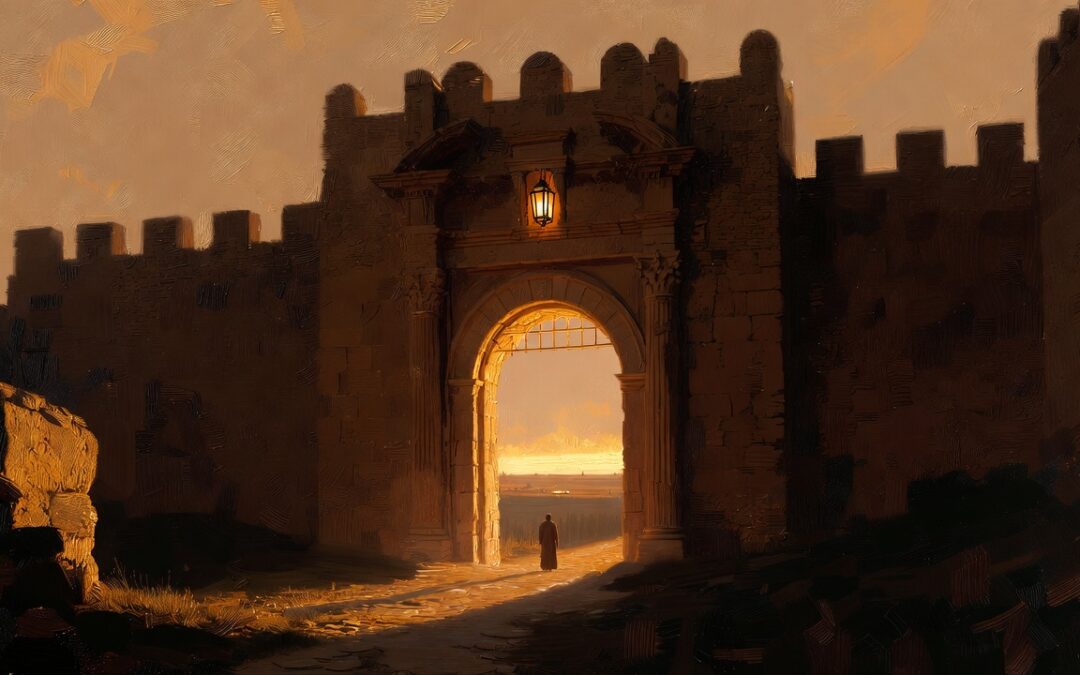
Judges and Officers in Every Gate — Justice, Power, and the Turn Toward Elul
Deuteronomy 16:18–21:9 · Haftarah: Isaiah 51:12–52:12 · Shabbat, 2 Elul 5786 · August 15, 2026 · Jerusalem candle lighting 6:43 PM · First Shabbat of Elul
Parasha at a Glance
| Category | Detail |
|---|---|
| Torah Reading | Deuteronomy 16:18–21:9 |
| Haftarah | Isaiah 51:12–52:12 (Fourth Haftarah of Consolation) |
| Hebrew Date | 2 Elul 5786 |
| Gregorian Date | Shabbat, August 15, 2026 |
| Candle Lighting (Jerusalem) | 6:43 PM, Friday, August 14 |
| Havdalah (Jerusalem) | 8:01 PM, Saturday, August 15 |
| Special Notes | First Shabbat of Chodesh Elul; fourth of the Sheva d'Nechemta (Seven Haftarot of Consolation) |
Torah Overview
Parashat Shoftim opens with a command that reads like a constitution: “Shoftim v’shotrim titen lecha b’chol she’arecha” — “Judges and officers you shall appoint for yourself in all your gates” (Deuteronomy 16:18). Moshe is no longer speaking to a nation gathered around a single Tabernacle in the wilderness; he is speaking to a nation about to disperse into cities, fields, and gates of its own, each of which will need its own machinery of justice. The very next verses forbid planting a sacred tree or erecting a pillar beside the altar of Hashem (16:21–22) and bar the offering of a blemished animal (17:1) — justice, the parasha insists, cannot be separated from purity of worship. A corrupted court and a corrupted altar are the same failure wearing two faces.
From the local courts the Torah ascends to the high court: a case too difficult for the gates is brought “el hamakom asher yivchar Hashem” — to the place Hashem will choose (17:8–13), and a judge who willfully defies that court’s ruling, the zaken mamre, faces the harshest penalty the Torah proscribes for anyone in a position of religious authority. Then the parasha turns from courts to crowns: Israel is permitted a king, but only one bound by law rather than above it — he may not multiply horses, wives, or silver and gold for himself, and he must write and carry his own Torah scroll “so that his heart not be lifted above his brethren” (17:14–20). The kohanim and levi’im receive their own portion and protection (18:1–8), and the parasha then draws a sharp line between the occult practices of the nations Israel is displacing and the true prophecy Hashem will send — climaxing in the promise of “navi kamocha,” a prophet like Moshe (18:15–22), together with the test for distinguishing a true prophet from a false one.
The second half of the parasha is a study in limits. Cities of refuge are established for the unintentional killer (19:1–13), protecting due process even for someone whose act caused a death. The boundary marker of a neighbor’s field may not be moved (19:14) — a single verse guarding property against quiet, creeping theft. No one may be convicted or punished on the word of a single witness; two are required, and witnesses proven to be zomemim (conspirators who fabricated their testimony) receive the very punishment they sought to inflict on the accused (19:15–21). The laws of war that follow are equally exacting: exemptions are granted to the newly married, the newly built, the newly planted, and the fearful (20:1–8), peace must be offered before a siege begins, and even in siege warfare the fruit trees surrounding a city may not be destroyed — “ki ha’adam eitz hasadeh,” for is the tree of the field a man, that it should be besieged along with the city? (20:19–20). The parasha closes with eglah arufah: when a corpse is found in a field with no known murderer, the elders of the nearest city must break the neck of a heifer and publicly declare “yadeinu lo shafchu et hadam hazeh” — our hands did not shed this blood (21:1–9). Even where guilt cannot be assigned, responsibility is not permitted to simply evaporate.
Talmudic Depth
The Gemara treats Shoftim as a working manual for building a functioning justice system, and the five sugyot below trace that system from the character required to sit in judgment, through the limits placed on the most powerful office in the land, to the outer edge of what even a nation at war may do.
A. The Character of a Judge — Sanhedrin 16b–17a
The Mishnah and Gemara in Sanhedrin 16b–17a lay out who may sit on a court: sages of wisdom, humility, and the fear of sin, men without personal flaws that would draw mockery, versed in a broad range of secular knowledge so that they can evaluate testimony intelligently, and — for the Great Sanhedrin specifically — fluent in many languages so that a court never needs a translator standing between it and a witness. The Gemara’s insistence on breadth of knowledge alongside piety reads as a rejection of the idea that sincerity alone qualifies someone to judge; the Torah’s “titen lecha” assumes a court can actually understand the case in front of it.
B. The King’s Torah — Sanhedrin 20b–22a
The Gemara in Sanhedrin 20b–22a opens with a three-way dispute over whether appointing a king was even a mitzvah, and moves quickly to the concrete limits of 17:16–17: how many horses, how many wives, how much silver and gold a king may amass before the accumulation itself becomes the sin, regardless of his intentions. Rabbi Yehuda’s position — that a king may multiply wealth so long as it funds the army and the treasury — is met by the Sages’ sharper reading: the Torah does not trust stated intentions to police power once it starts accumulating. The requirement that the king write his own sefer Torah and keep it with him “kol yemei chayav” (22a) is the Gemara’s answer to the entire problem: the throne does not get to stand outside the law it enforces.
C. Zomemim: The Penalty That Fits the Plot — Makkot 5a–5b
Makkot 5a–5b works through the mechanics of hazamah, the unique form of contradiction that turns witnesses into zomemim: not merely disputing what happened, but a second set of witnesses testifying that the first pair could not have seen the event at all because they were demonstrably elsewhere. The Gemara is precise about why this differs from ordinary contradictory testimony (hakchashah), and about the Torah’s rule of “ka’asher zamam” (19:19) — the plotters receive exactly the outcome they sought for their victim, no more and no less. The sugya’s underlying concern is that testimony is not just information; it is an act with the power to end a life, and the Torah punishes the attempt to weaponize that power with matching precision.
D. Bal Tashchit: What War May Not Touch — Bava Kamma 91b–92a
Bava Kamma 91b–92a extends the prohibition of 20:19–20 beyond wartime sieges to any wasteful destruction, and tells the story of Rabbi Chanina ben Dosa’s household, where the felling of a fig tree before its time was treated by the Gemara as serious enough to warrant discussion at the level of divine accounting. The Rambam later codifies bal tashchit as a general principle covering vessels, garments, and buildings, not only trees — but the Gemara’s choice to anchor the whole category in the siege law of Shoftim is instructive: the case the Torah picks to teach a universal ethic of non-waste is the one situation where waste would be easiest to excuse, a nation at war with an enemy at the gate.
E. Eglah Arufah: The Elders’ Oath — Sotah 44b–46a
Sotah 44b–46a asks an uncomfortable question head-on: surely the elders of the city did not literally murder the traveler found dead in the field, so what are they swearing to when they declare “yadeinu lo shafchu”? The Gemara’s answer is that the oath denies a different failure — that the victim was never sent away without an escort, without food, without having been seen safely past the city’s gates. Responsibility, in this sugya, is not limited to the hand that struck the blow; it extends to everyone whose ordinary decency could have changed the outcome and didn’t. A death with no named culprit is still a death the community must answer for.
Kabbalistic Depth
Shoftim is read every year on the border of Elul — in 5786 it falls precisely on the first Shabbat of the month — and the mystical tradition reads its opening command about courts and gates as a command about the soul’s own approaching cheshbon hanefesh, its internal accounting before the Days of Awe.
A. Zohar — The Two Pursuits of Tzedek
The Zohar (vol. III, Shoftim, 281a and surrounding folios) lingers over the doubled language of “Tzedek, tzedek tirdof” (16:20), reading the repetition as a call to pursue justice in two separate courts at once — the court below and the court above, this world and the world that judges it. “Tzedek” in Zoharic language is bound to the sefirah of Malchut, the attribute that receives judgment from the higher sefirot and channels it into the physical world; the double command teaches that a person’s pursuit of justice on earth is never self-contained, it is simultaneously drawing down, or withholding, the corresponding measure of justice from above.
B. Arizal — The King in the Field
The Arizal’s teachings on the Elul season, transmitted through Pri Etz Chaim and the customs he instituted for Selichot and the daily sounding of the shofar beginning on Rosh Chodesh Elul, frame the month as the time when “the King is in the field” — accessible to anyone who steps out to greet Him, before He returns to the palace for the Yamim Noraim. Read against Shoftim’s opening command, the teaching lands with particular force: the courts a person is told to appoint “b’chol she’arecha,” in all of one’s own gates, are the very mechanism by which the accessible King of Elul is met — discernment applied at the gate is what makes the encounter in the field possible at all.
C. Baal Shem Tov — The Gates Are the Senses
The Toldot Yaakov Yosef transmits, in the name of the Baal Shem Tov, a reading of “shoftim v’shotrim titen lecha b’chol she’arecha” in which the “gates” are not civic gates at all but the body’s own openings — the eyes, the ears, the mouth — through which the world enters a person’s awareness. Each gate needs its own shofet, a judge who evaluates what is being let in, and its own shoter, an officer who enforces that judgment even against the will’s own resistance. On this reading, the Baal Shem Tov’s famous teaching that a person can learn a lesson in avodat Hashem from everything they see and hear is not a separate idea but the direct output of a gate correctly judged: nothing that reaches the senses is neutral once the internal court is doing its work.
D. Alter Rebbe — Daat as the Sitting Judge
In Likutei Torah, Parshat Shoftim, the Alter Rebbe maps the verse onto the architecture of the soul described throughout Chassidut Chabad: the intellect, particularly the faculty of daat, is the shofet that must be installed in every gate of a person’s emotional life, weighing each impulse of ahavah and yirah, love and fear, before it is permitted to act. Elul, in this schema, is specifically the season when daat is called to strengthen its grip, since the encounter with the accessible King in the field is only usable to the extent the person meeting Him has a functioning court seated at every gate through which that encounter must pass.
E. Pri Tzaddik — Elul as the Nature of the Month
Rav Tzadok HaKohen of Lublin, in Pri Tzaddik on Rosh Chodesh Elul, teaches that Elul’s power for teshuvah is not merely a calendar convenience but is built into the month’s own inner nature — the acronym “Ani L’Dodi V’Dodi Li,” I am to my Beloved and my Beloved is to me (Song of Songs 6:3), describes a mutual movement toward closeness that the month itself carries, independent of a person’s merit. Placed beside Shoftim’s courts in every gate, the Pri Tzaddik’s Elul becomes the season in which that inner court’s verdicts are not handed down in isolation but are met halfway — the very din a person imposes on themselves in Elul is already an expression of the closeness the month exists to reveal.
World This Week
Shoftim gives a structure for justice, power, and accountability that is not exclusive to any one generation. The seven parallels below trace that structure into this week’s headlines — structural echoes only. None of them equate the righteous framework the Torah is building with the conduct of any actor described below; where a comparison could be misread that way, the moral distinction is stated explicitly.
1. Judges in Every Gate — Israel’s 2026 Election Season
Deuteronomy 16:18 commands Israel to install its own judges and officers, gate by gate, rather than import justice from elsewhere. Israel enters its 2026 election cycle with exactly that structural question on the table: who gets seated at the gate, and by what process. This is a live, unresolved argument internal to Israeli democracy, not a moral verdict on any candidate or party — readers who want the fuller picture of how leadership authority has functioned across Israel’s history can see our related piece on the leadership of Israel.
2. The King’s Torah — Limits on Executive Power
Sanhedrin 20b–22a makes clear that Israel’s king answers to a written law he must personally carry. The 2026 U.S. Supreme Court term produced a string of rulings reshaping how much independent authority the executive branch holds over agencies once considered insulated from it, a live structural debate over where the boundary between an office and the law that binds it should sit (Christian Science Monitor). The parasha’s answer — that even the most powerful office in the nation writes its own copy of the law it is bound by — is a standard, not a description of any government's current conduct.
3. Zomemim in the Age of AI — Fabricated Testimony at Scale
Deuteronomy 19:16–21 treats false testimony as an attempted act of violence, punishable by the very harm it sought to cause. Election-security researchers are warning that AI-generated deepfakes are becoming a central tool of political disinformation heading into 2026 races worldwide (Brennan Center for Justice). The Torah’s zomemim law assumes fabricated testimony can be identified and answered in kind; the scale problem AI introduces is precisely that identification becoming harder, which is what makes courts built at every gate — human judgment applied locally — more urgent, not less.
4. Cities of Refuge — 2026 Asylum Policy
Deuteronomy 19:1–13 builds dedicated cities, with marked roads, so that someone fleeing an unintended killing reaches safety before anger can catch up with judgment. Asylum and refugee policy is undergoing significant procedural change in 2026, including new interview and processing rules that determine how quickly and fairly a claim of danger is actually heard (ImmigrationVision). The structural parallel is procedural, not political: the Torah’s concern is that a system meant to protect someone fleeing danger must be reachable and fair by design, whatever a society ultimately decides its policy should be.
5. Bal Tashchit — What War Is Destroying Beyond the Battlefield
Deuteronomy 20:19–20 forbids destroying fruit trees even while besieging an enemy city — a limit placed on a nation at the height of its wartime right to act. A recent Nature Sustainability analysis and a UN Human Rights Council report on “domicide” both document the scale of environmental and housing destruction across the Gaza and Ukraine conflicts (Nature Sustainability; UN). The Torah does not weigh in here on the justice of either war; bal tashchit is a limit the Torah insists applies to Israel’s own conduct in a permitted war, and it is offered as that — a standard for restraint, not a verdict on any current combatant.
6. Eglah Arufah — Naming Responsibility for Deaths With No Named Culprit
Deuteronomy 21:1–9 refuses to let an unsolved death simply go unaddressed; the nearest city must formally answer for it. International accountability mechanisms are attempting a version of the same structural move at far larger scale, from the ICC’s ongoing Gaza-related proceedings to the multinational Task Force on Accountability for Crimes Committed in Ukraine (U.S. Department of Justice, non-Jewish source). Sotah’s reading of the elders’ oath — that responsibility extends to whoever could have prevented the outcome and didn’t — is the deeper structural point behind any tribunal: formal process exists precisely because silence is not a neutral option.
7. Lo Tasig Gvul — Moving the Boundary Marker
Deuteronomy 19:14 forbids quietly shifting a neighbor’s boundary stone, treating a slow territorial encroachment as theft no less than an open one. Venezuela and Guyana returned to the International Court of Justice in 2026 over Venezuela’s claim to the Essequibo region, a dispute the Hague is being asked to resolve through recognized legal process rather than unilateral action (Washington Post). The Torah’s boundary-marker law is the oldest version of the same principle now before the ICJ: borders are not settled by whoever pushes hardest, but by a standard both sides are bound to honor.
Summary
| Theme | Torah Source | This Week’s Parallel |
|---|---|---|
| Judges in Every Gate | Deuteronomy 16:18 | Israel’s 2026 election season |
| The King’s Torah | Sanhedrin 20b–22a | Supreme Court executive-power rulings |
| Zomemim | Deuteronomy 19:16–21 | AI deepfakes and election disinformation |
| Cities of Refuge | Deuteronomy 19:1–13 | 2026 asylum policy changes |
| Bal Tashchit | Deuteronomy 20:19–20 | Environmental toll of Gaza & Ukraine wars |
| Eglah Arufah | Deuteronomy 21:1–9 | ICC & Ukraine accountability mechanisms |
| Lo Tasig Gvul | Deuteronomy 19:14 | Venezuela–Guyana ICJ border case |
As Elul opens and the shofar begins to sound each morning, Shoftim hands us the tools before it hands us the season: courts at every gate, a throne bound by its own scroll, testimony weighed with precision, refuge built into the system, restraint even in victory, and responsibility that refuses to evaporate when no one is named. May we merit to build those gates well — within our own cities, and within ourselves — and may this Elul carry us, as the Pri Tzaddik teaches, toward the closeness it already holds out to meet us. Shabbat shalom, and Chodesh Tov.