5786 – Tzav
Parashat Tzav 5786: Esh Tamid, Korban Todah, Zohar & Talmud insights. How this parasha mirrors the Iran war, Strait of Hormuz, and the countdown to Pesach.
The Eternal Fire and a World in Flames
Parasha at a Glance
| Book | Vayikra (Leviticus) |
| Chapters | Leviticus 6:1 – 8:36 |
| Reading Date | Shabbat, 10 Nisan 5786 / March 28, 2026 |
| Special Shabbat | Shabbat HaGadol, the Great Shabbat before Pesach |
| Haftarah | Malachi 3:4–24 |
| Name Meaning | Tzav = "Command", the strongest form of Divine instruction |
| Central Image | The Esh Tamid, the Eternal Fire of the Altar |
Torah Overview
Vayikra vs. Tzav: Two Perspectives, One Altar
Parashat Tzav 5786 is the Torah's second consecutive deep dive into the laws of the korbanot. Parashat Vayikra addressed the nation, voluntary impulse toward the Divine. Parashat Tzav 5786 is addressed to the Kohanim, Aaron and his sons. Its language is not invitation but command. Not voluntary impulse but obligation. Nechama Leibowitz notes the order shifts: in Vayikra the voluntary offerings come first; in Tzav the gradations of holiness organize the list, because the Kohen must understand the hierarchy of sanctity he navigates with every act of service. The nation brings offerings from below; the Kohen maintains the fire as a cosmic obligation that does not depend on mood, inspiration, or individual piety.
The Six Korbanot
- Olah, Burnt Offering: Consumed entirely on the altar. Atonement for neglected positive commandments, sins of omission, not commission. The fire burns all night.
- Mincha, Meal Offering: The poor man's offering. Scripture regards one who brings it as if he offered his very soul.
- Chatat, Sin Offering: For inadvertent transgression. Improper intent invalidates it, intention is inseparable from act.
- Asham, Guilt Offering: Addresses the psychological residue of wrongdoing that lingers even after the act is corrected.
- Korban Todah, Thanksgiving Offering: For survivors of mortal danger. Forty loaves consumed in one day, a social imperative to share the miracle publicly. A miracle unexpressed is a miracle half-forgotten.
- Shelamim, Peace Offering: Shared among Hashem, the Kohen, and the offeror. Covenantal celebration. Everyone sits at the table.
The Esh Tamid
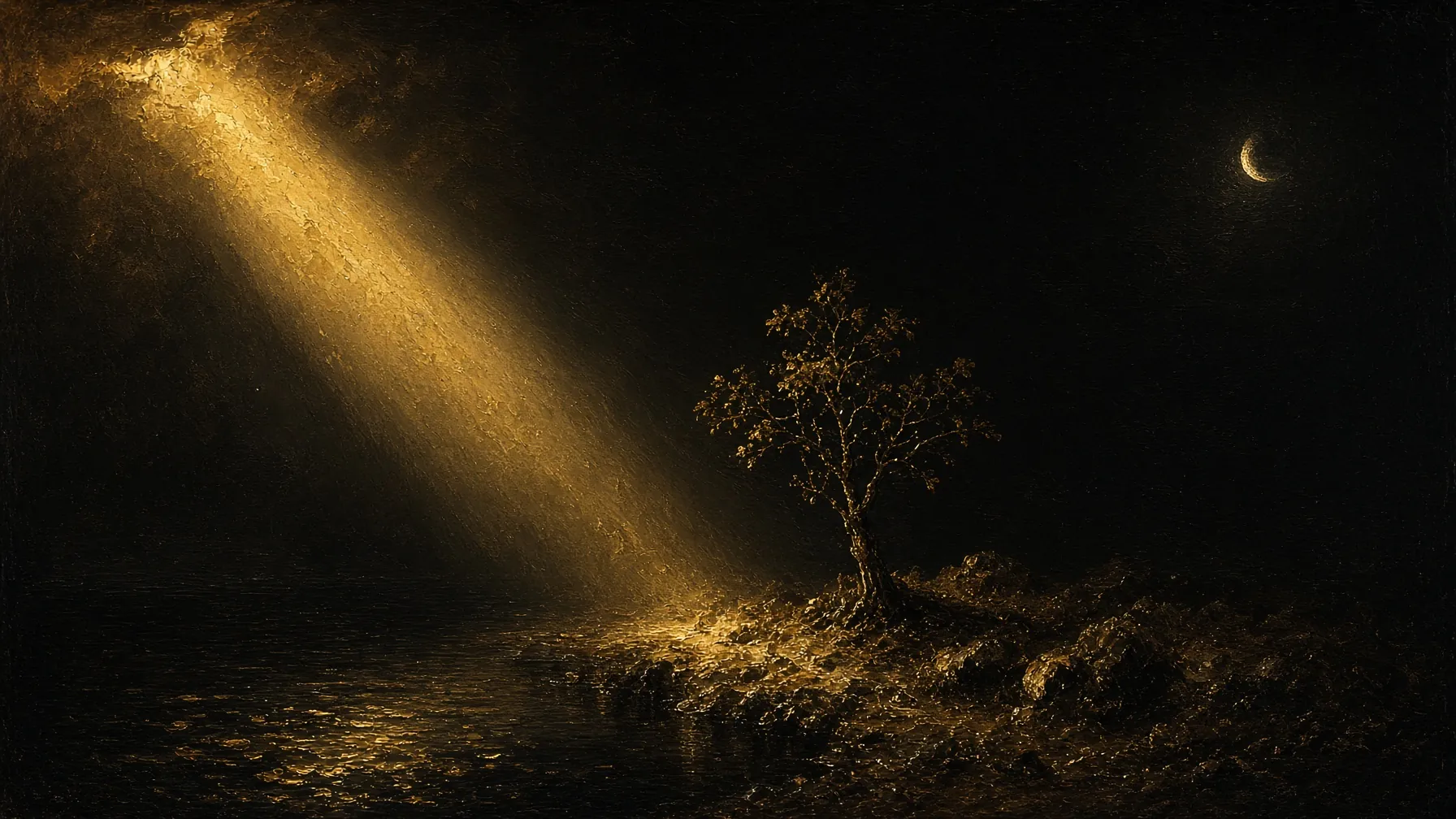
"A continuous fire shall burn upon the altar; it shall not go out.", Vayikra 6:6
Mentioned four times in the opening six verses. The altar consumes the Olah; the fire defines the altar. The laws of Terumat HaDeshen, the daily removal of ashes, open the section. Every morning, the Kohen dresses in full linen vestments to remove a handful of ash, then changes garments. Talmud (Yoma 23b): even the disposal of yesterday's ashes requires full priestly dignity. Holiness does not exempt one from maintenance work; it sanctifies it.
The Inauguration of Aaron: Miluim
Aaron is immersed, anointed, dressed in the eight priestly garments. Blood is applied to the right ear, right thumb, and right great toe, consecrating hearing, doing, and walking. For seven days they remain at the entrance of the Tent of Meeting without departing. Consecrated but not yet deployed. This liminal state is a profound teaching about leadership: preparation is not hesitation, it is the necessary precondition of holy action.
Talmudic Depth
A. Why "Tzav"?: Urgency Across Generations
Rashi (Sifra): Tzav denotes urgency carrying force l'doros, across all generations. Used specifically when the commandment involves financial loss for the recipient, driving through the human tendency toward passive compliance. The Ba'al HaTurim: gematria of Tzav (צו) = 96 = aseh chazakah, "perform with strength."
B. Human Fire and Divine Fire
The Talmud (Yoma 21b): the altar fire descended from Heaven, yet the Torah commands the Kohen to add wood every morning. The Alter Rebbe in the name of the Maggid of Mezeritch: "Even though the fire descends from above because of Divine arousal, it is required that we contribute fire from the mundane. A human arousal from below leads to a Divine arousal from above, ruach aytei ruach v'amshich ruach." Human effort activates and amplifies the Divine, it does not replace it.
C. The Korban Todah: Eternal Thanksgiving
The Netziv: forty loaves and reduced time window force the person to invite many guests, the purpose is not only to thank Hashem but to recount the kindness publicly. The Midrash (Vayikra Rabbah 7): in the future all sacrifices will be abolished, but the Korban Todah will not. The voice heard in the rebuilt Jerusalem (Yirmiyahu 33:11): "the voice of those who say: Give thanks to Hashem of Hosts." Giving thanks is our eternal portion.
D. The Kohanic Eating as Atonement
When the Kohen eats the sin offering, the Zohar and the Maharal explain that the eating is itself atonement for the offeror. The bringer confesses at slaughter; the Kohen's eating seals the transaction. The Kohen who offers a Chatat on his own behalf cannot eat from it, one cannot be simultaneously the processed and the processor.
E. Dignity in the Menial
Full priestly vestments for ash removal. The Hebrew tokad bo, "blazing upon it", can also be translated as "blazing within him." The enthusiasm, fire, of the one performing the offering must match the flame on the altar. Without inner fire, the external fire is mere combustion.
Kabbalistic Depth
A. The Zohar: Din and Chesed
The Zohar: fire represents judgment, intensity, and power, but can go in different directions. There is a fire of holiness, love, longing for God. And a fire that gets misdirected, impulse, ego, anger. In the Sefirot, fire corresponds to Gevurah. Channeled through the Mizbeach it becomes the purifying flame that transforms material into spirit. The Zohar: there is a fire that consumes a fire. The holy fire, the fire of Chesed, consumes the negative fire.
B. The Altar Built on Adam's Birthplace
The Zohar: the place of the altar is where Adam was created, the place of rectification. Embedded into the structure of creation is the possibility of return. The altar is already there. The eternal fire is already there. The work is not to create holiness from nothing, the work is to uncover it. The Arizal: the Olah corresponds to bitul (self-nullification); the Shelamim corresponds to shleimut (wholeness). Each offering is not a transaction but a transformation.
C. The Alter Rebbe: Interior and Exterior Altar
Rabbi Shimon bar Yochai in the Zohar: "With one burning connection, I have been connected to the Holy Blessed One; with Him I am on fire." The Tanya: the divine soul (nefesh ha'elokit) is itself an Esh Tamid within the human being. The entire corpus of Jewish practice is a system of birurim, separations and elevations, that transform raw animal energy into contributions to the holy fire. Rebbe Nachman: at no point can we let the fire go out.
D. Pri Tzaddik: Torah as the Eternal Flame
The Zohar: "A constant fire on the altar, this is the Torah, about which it says: 'Is not My word like fire?'" (Yirmiyahu 23:29; cited in Rav Tzaddok of Lublin, Pri Tzaddik, Parashat Tzav 4). Esh Tamid is not an ancient Temple detail. It is the description of the entire Jewish enterprise across 3,800 years.
E. Shabbat HaGadol: The Sefirah of Chesed Opens
The Kabbalists: Gadol (great) is the appellative of Chesed, Avraham's Sefirah. Shabbat HaGadol opens the channel of Chesed that pours through the Seder night into the 49 days of the Omer and ultimately into Matan Torah. The Zohar: the Shechinah already begins Her movement toward freedom this Shabbat. Every year on this Shabbat, that cosmic restructuring begins again.
The World This Week
1. The Strait of Hormuz: The World's Altar on Fire
Iran's Revolutionary Guard declared the Strait of Hormuz "closed." Qatar's LNG facilities struck; Saudi Arabia's largest refinery hit. Oil terminals across the Persian Gulf are burning. The Esh Tamid's central teaching: fire, when uncontrolled, undirected, uncontained by sanctity, becomes pure destruction. When holy fire is absent, the fires of destruction rush in.
2. The Korban Todah Moment: A World of Survivors
Turkey and NATO shot down a suspected Iranian ballistic missile violating Turkish airspace this week. The entire Middle East is in a sustained, rolling Korban Todah moment, those who survive each day's strikes are counting mercies that would have required forty loaves and a feast of gratitude in the Temple era. The Midrash: the Korban Todah is the only offering that persists into the Messianic era, because gratitude will remain eternal even when all evil is eliminated.
3. The Death of Khamenei: Malachi's Haftarah
Iran confirmed the death of Supreme Leader Ali Khamenei in February, following strikes on Tehran. The Haftarah of Shabbat HaGadol, Malachi 3:23: "Behold, I will send you Eliyahu the prophet before the great and awesome day of Hashem comes." The fall of a decades-long theocratic ruler who repeatedly called for Israel's destruction, in the week before Pesach, is the kind of historical event Malachi's haftarah was written to process.
4. The Strange Fire of Mojtaba Khamenei
Mojtaba Khamenei issued his first public message vowing to continue the Hormuz blockade. Parashat Tzav 5786 is followed almost immediately by Nadav and Avihu, Aaron's own sons, who brought aish zarah, strange fire, before Hashem. Fire not commanded, from the wrong source, with the wrong intent. The Esh Tamid consumed them. Mojtaba does not parallel Aaron's sons, he parallels Nadav and Avihu's error. A son who inherits fire but brings it from a place of destruction. The Torah tells us what happens to strange fire. It does not last.
5. Aaron at the Threshold
For seven days during the Miluim, Aaron and his sons were commanded to remain at the entrance of the Tent of Meeting, consecrated, prepared, and waiting. President Trump and the U.S. military are weighing the costs of putting boots on the ground in the Middle East, caught between escalation and de-escalation. The parasha sanctifies the threshold state. Preparation is not hesitation, it is the necessary precondition of holy action.
6. The Mincha: Substitute Offerings Under Scarcity
The U.S. eased sanctions on Russia and Venezuela to unlock oil sources as the war with Iran continues. The world is scrambling to offer what it can rather than what it prefers. The Mincha, the poor man's offering, is the Torah's recognition that crisis conditions require improvisation. The Talmud: God regards the poor person's Mincha as if he offered his soul. The effort matters as much as the quantity.
7. Shabbat HaGadol: Redemption Imminent
Ten days from Pesach. The lamb is being set aside. The Strait of Hormuz is the world's narrow straits right now, a geopolitical Mitzrayim. History is passing through its narrowing. The eternal flame of Parashat Tzav 5786 is not merely a Temple detail. It is the description of the Jewish soul across millennia, and the description of this moment: fire burning, the world being refined, Pesach approaching. The question Tzav leaves us with, in a week when fire is burning on every front page:
Is the fire still burning? Who is tending it? Are you doing it with your vestments on?
Summary
| Parashat Tzav 5786 Theme | 2026 World Event |
|---|---|
| Esh Tamid, Eternal fire on the Altar | Strait of Hormuz oil terminals burning |
| Directed fire = sanctity; undirected = destruction | Iran's misdirected military fire vs. purposeful action |
| Korban Todah, Thanksgiving offering of survivors | Nations counting mercies after daily strikes |
| Malachi's Haftarah, Sudden fall of the wicked | Death of Khamenei days before Pesach |
| Aish Zarah, Strange fire of succession | Mojtaba Khamenei inherits fire from the wrong place |
| Aaron at the threshold, 7 days of waiting | US/NATO leaders deliberating whether to escalate |
| Mincha, Substitute offerings under scarcity | US easing Russia/Venezuela sanctions for oil |
| Shabbat HaGadol, Corridor before redemption | World in the narrow straits before breakthrough |
Shabbat Shalom and Chag Pesach Kasher v'Sameach. May the Esh Tamid burn within us even as the fires of the world rage around us, and may we merit to see the flames of judgment transformed, as they were in Egypt, into the fire of redemption.